The Rossel Sisters Are Sewing Sustainability (Jorge Torres, Issue 12)
Malt bags. Recycling. Creating craft beer fashion from craft beer trash.
Words & photos by Jorge Torres.
The following article by Jorge Torres was originally published in May 2026 in Issue 12 of Final Gravity, our print beer zine telling personal, human-centered stories about beer. You can order the print issue here, or subscribe here.
***
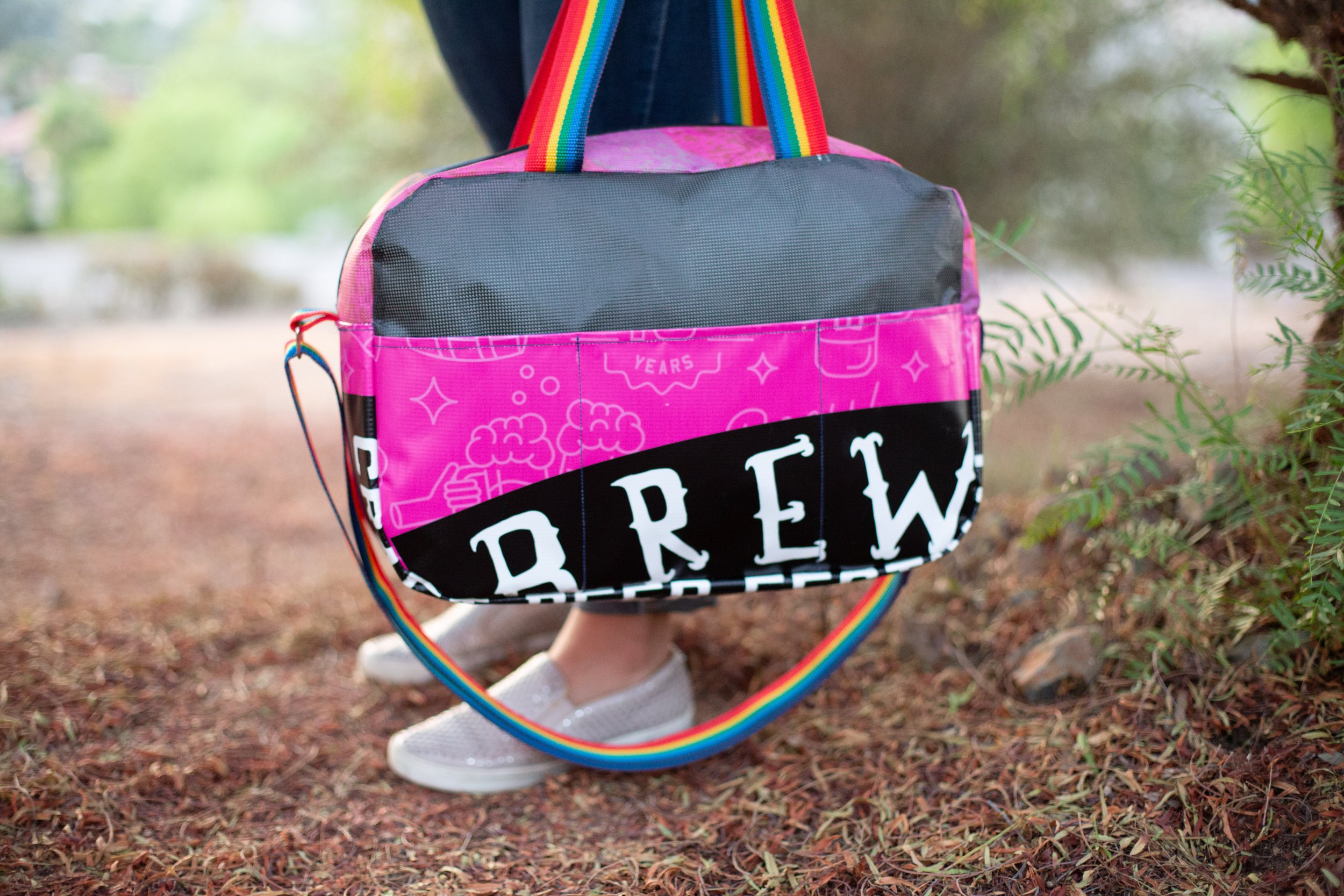
Ice chips were stuck to my hands, and I had just finished loading some donated beer into coolers. Today was my first time at the annual San Diego Craft Brewers Convention and I was volunteering, getting things ready beforehand. Folks were setting up their booths in the quad of the campus where the convention was held. The pop-up canopies clicked and snapped into place, banners and tarps whipped in the wind, and one booth in particular caught my eye. Among the canning, marketing, and distribution companies was something very different: The Bountiful Bag. The business is run by two sisters on a journey to overhaul sustainable practices in the beer industry.
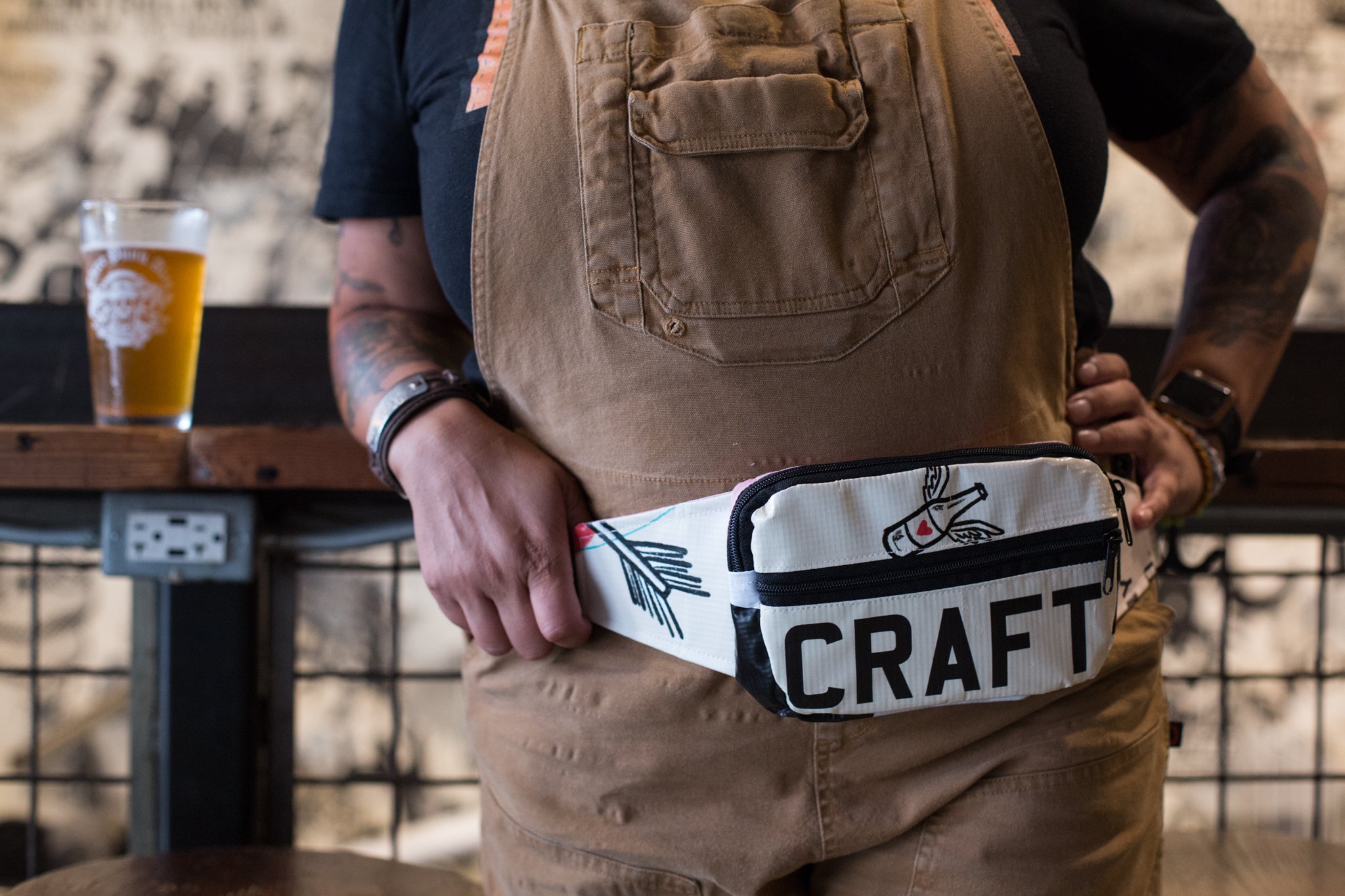
As I looked over at the booth, I saw Romi Rossel thoughtfully arranging their merchandise to display: stunning upcycled malt bags fashioned into totes. Just next to the booth was Fiorella “Fio” Rossel Borkert enthusiastically gesticulating in an outfit that screamed both punk rock and sustainability (including a hand-made fanny pack). This snapshot first impression is the Rossel sisters in a nutshell: Fio, the seamstress with a vision, and Romi, the marketing director with a plan.
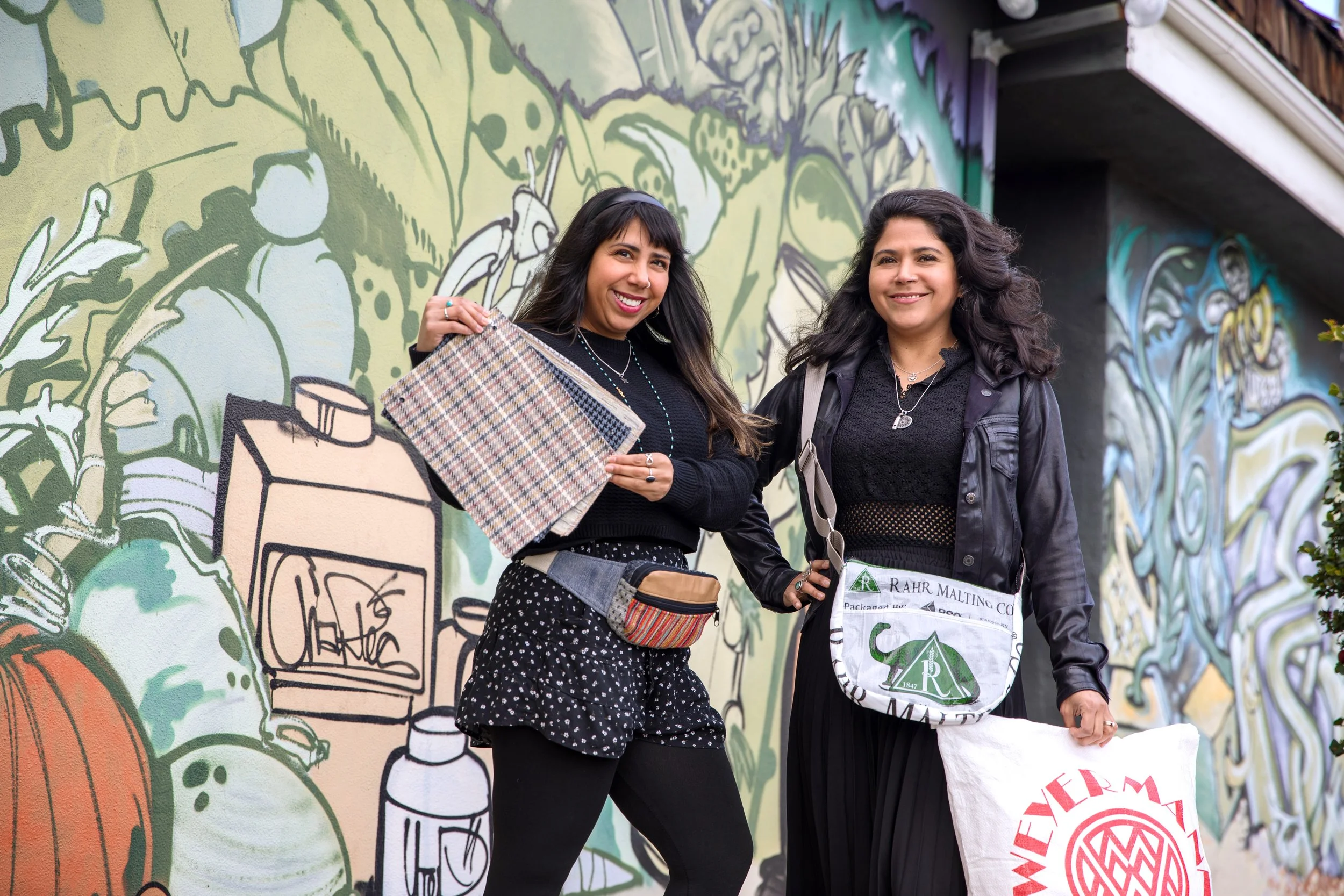
Romi and Fio are putting in the hours to make big impacts in sustainability. Their work goes beyond The Bountiful Bag, founded in 2018. They are also co-founders of the nonprofit San Diego Brewcycling Collaborative, founded in 2021. The nonprofit works with breweries to divert disposable waste such as packaging plastic for upcycling and reuse. Obviously, it’s wicked cool to be able to help breweries coordinate with local farmers or to shift their packaging methods to become more sustainable, so I was curious how they found themselves here. When I met with Fio and Romi, I asked them if they dreamed about driving change in sustainability when they were little girls. They both laughed at me.
Early on, Fio’s ambitions were torn between fashion and food. She chose fashion and began working for a pretty large company as a product manager. It was her first experience seeing how fast fashion at scale was creating so much waste.
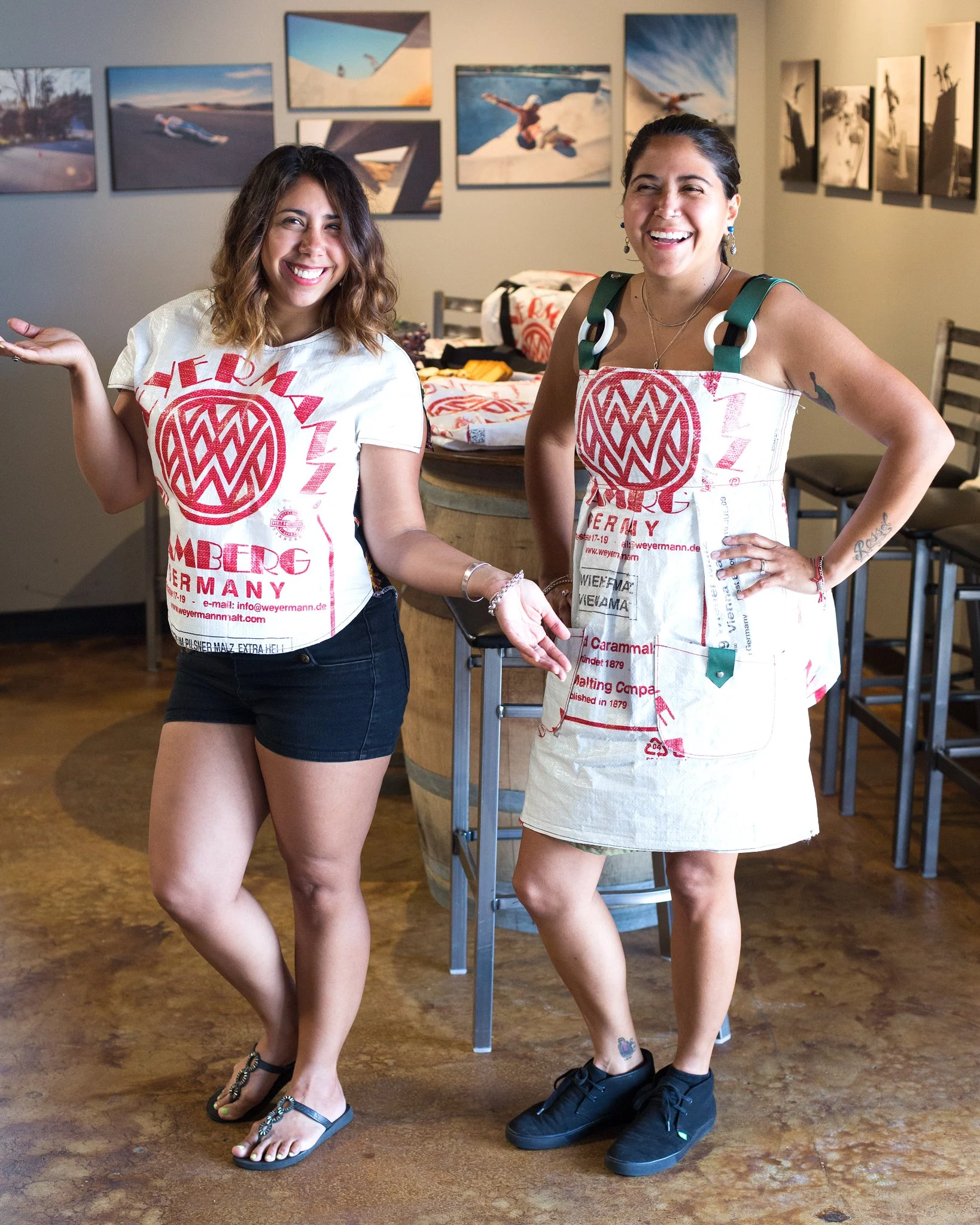
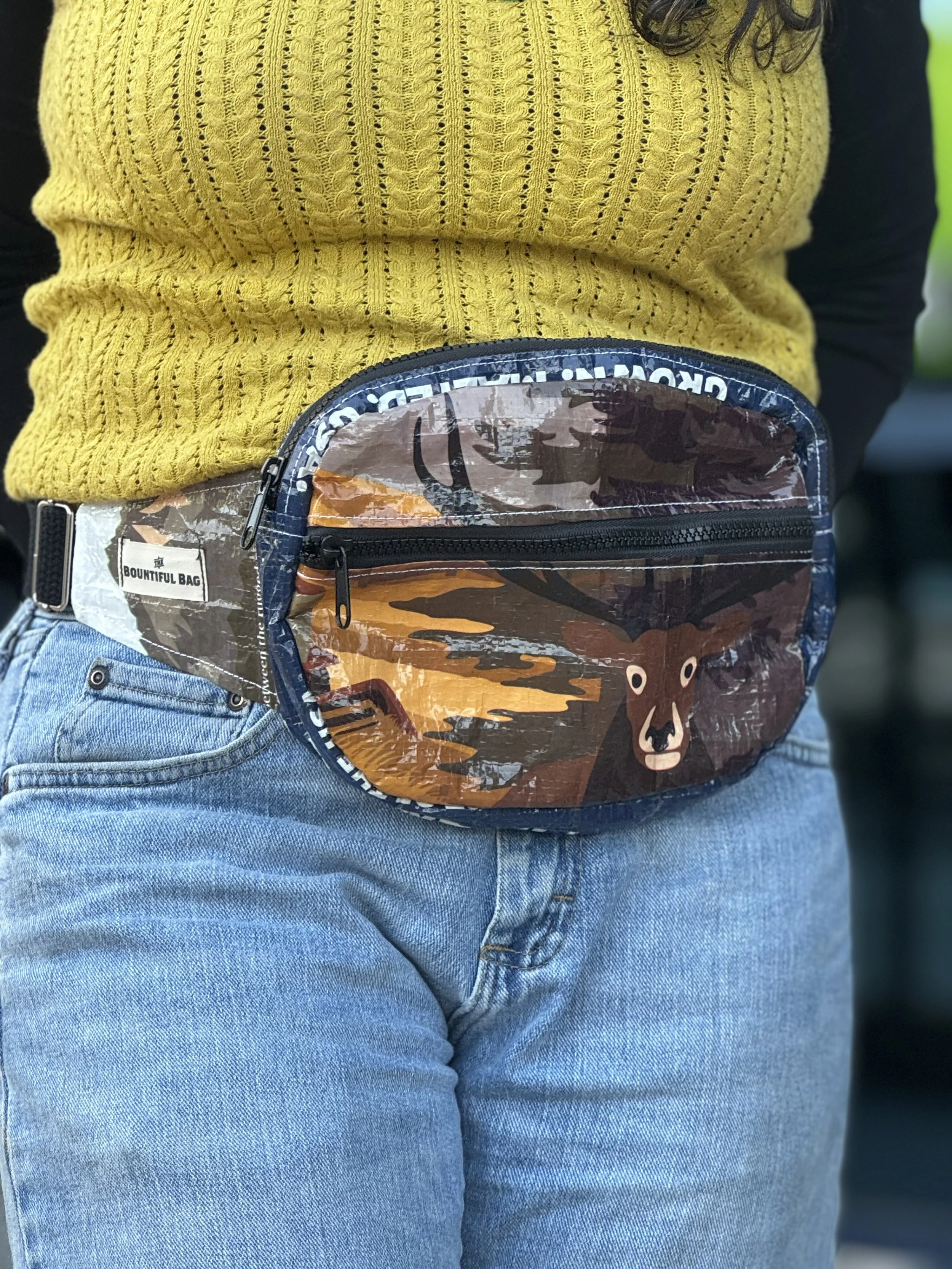
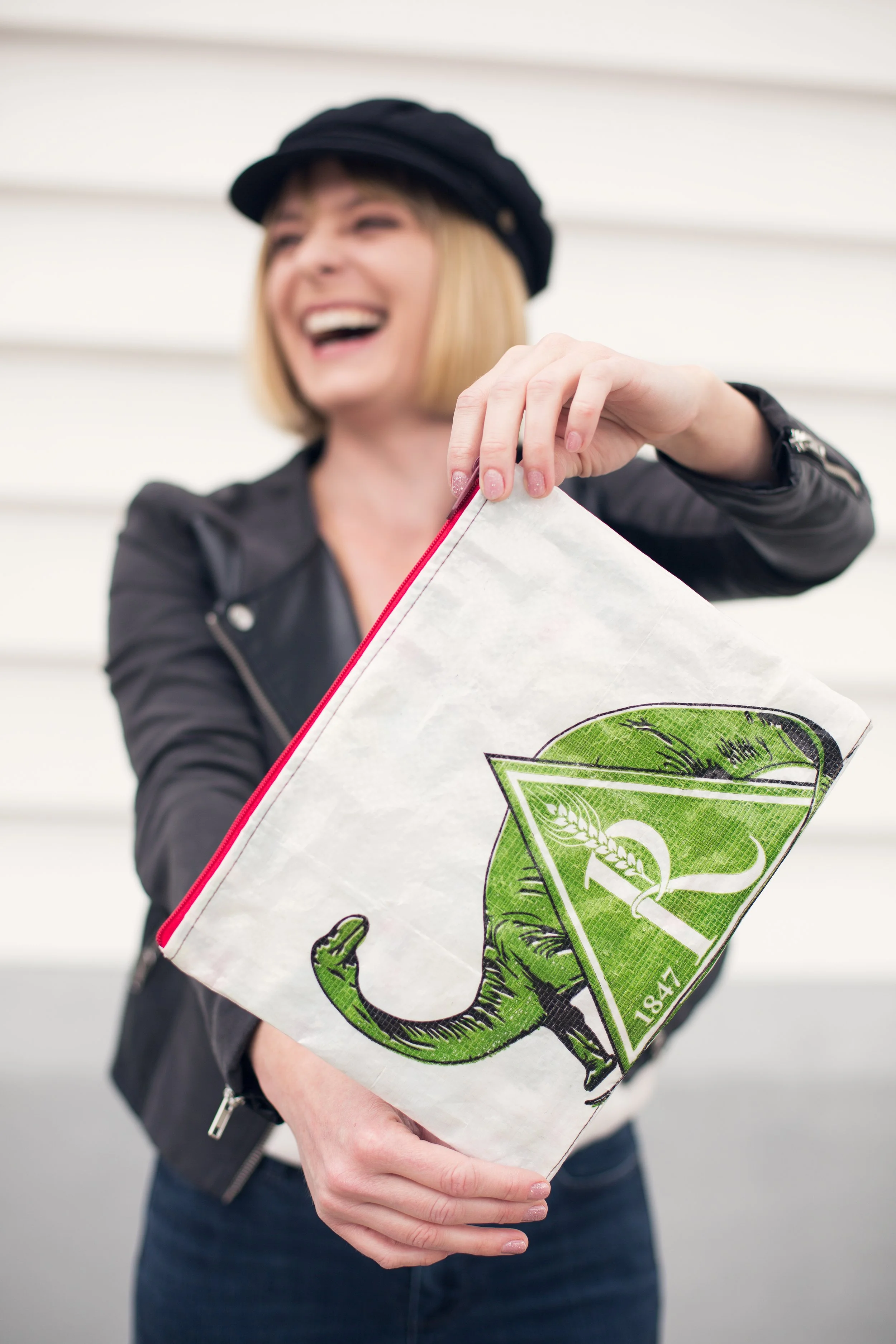
“We produced 2.3 million garments per color… six seasons a year,” Fio tells me as she recounts her turning point. The revelation of how much waste this created lit a fire under her, but the final nail in the coffin for her was when she couldn’t reconcile the inhumane treatment of outsourced workers overseas. She told her husband she couldn’t stand it, that she just wanted to quit and go work at a coffee shop. I’m glad she ended up at a brewery instead.
Romi knew exactly what she wanted from an early age. She wanted to work in film–specifically, she wanted to do visual effects. She hustled and landed work in a prestigious studio, but the catch was that the hustle never really stopped. The culture there and the future she saw for herself weren’t aligning with her vision for her life.
“I wanted to do something that meant more, use my talent to highlight companies or nonprofits,” Romi explains, adding that the cyclical nature of her work neglected people at the grassroots level. “I wanted my work to be about the community and not about the corporations.”
Her pivot was a sharp turn away from the arts. She found new roles to develop more universal skills, even working in accounting for a time. These skills lend themselves well to the many hats she wears now.
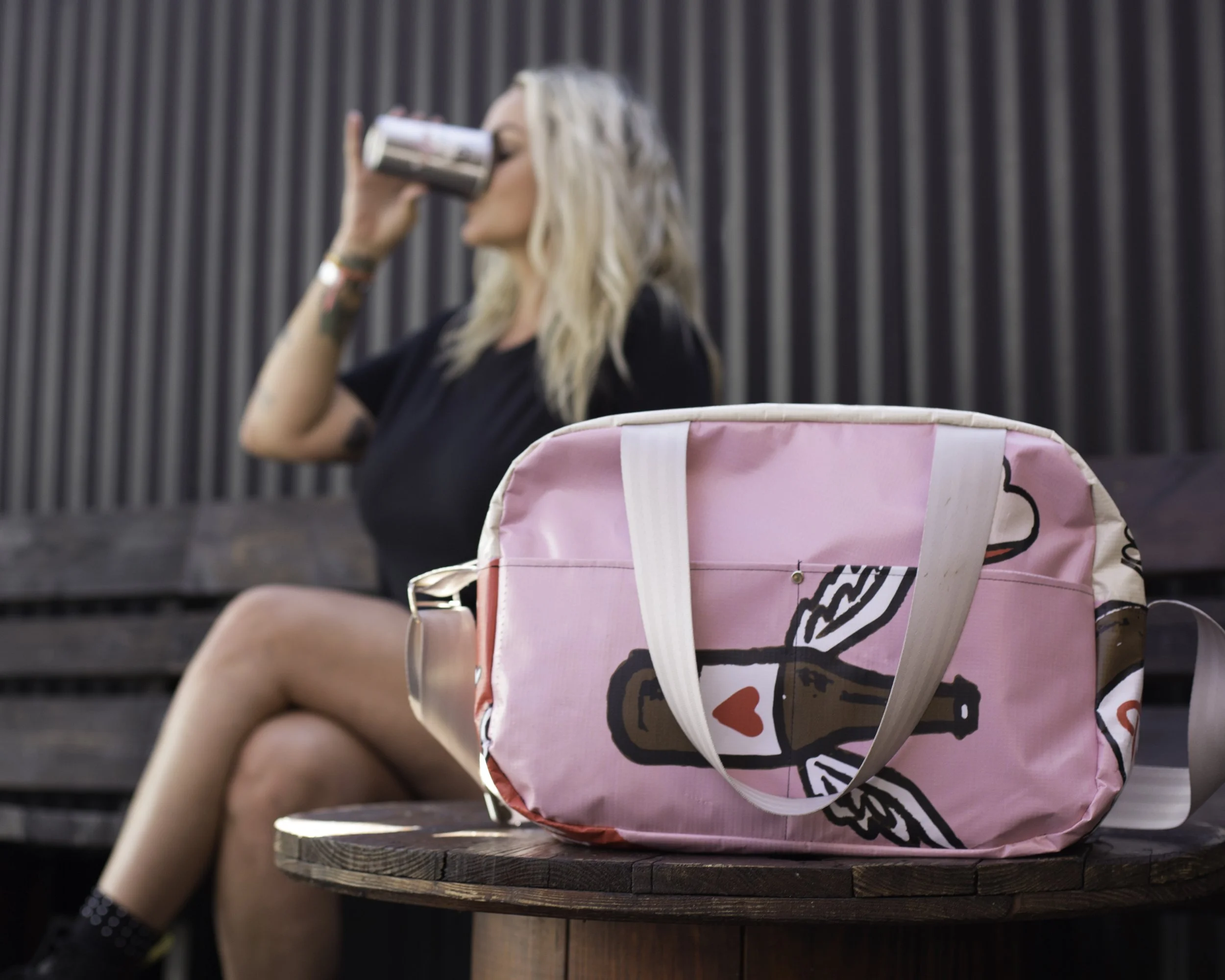
When Fio moved to San Diego, she found work at a local brewery, and it didn’t take long before she felt inspired to create again. This time, she found herself prototyping “bougie aprons” for the folks in the kitchen. Her unique flair and fashion sense inspired the owner to propose she try doing something with used malt bags. Fio took one home and worked her magic, turning it into a tote bag.
“We do still have our very first original,” she told me excitedly. “I still use it—a seven-year-old bag.”
I’d say that malt bag has gotten more use than anyone would’ve ever predicted. It’s really the ideal outcome for upcycled material.
All the while, Romi was ruminating on what her next move might be. When she saw what Fio did with the malt bag, it all felt so clear. Romi tells me she was shaking when it happened. She knew this could be it: the human-centric, community-oriented purpose that Romi was searching for. Fio never suspected this little project could have so much potential, but after talking to Romi, she dug deeper. They dialed a local hotline, I Love A Clean San Diego, knowing it was where the used malt bags were being sent currently. The hotline confirmed that, unfortunately, the malt bags aren’t curbside recyclable. The only path for these bags was upcycling or building out a substantial industrial-scale pipeline to keep them out of landfills. This was the birth of The Bountiful Bag.
Craft-forward, small batch, artisanal upcycling. You can try saying that five times fast, but the Rossel sisters are working even faster. They run The Bountiful Bag entirely themselves, and use an impressive amount of excess materials that come their way.
“Our seatbelt run became legend!” Fio boasts, “We went through at least 4,500 yards of seatbelts?” As she looks to her sister, Romi enthusiastically nods in confirmation. The seatbelt straps were used to make some particularly rad duffels and totes. The fact that they exhausted that material is a testament to the impact of their upcycling, but the same can’t be said for all the malt bags. The two of them can’t handle the current volume. That’s where they hope the Brewcycling Collaborative can make a larger impact. This non-profit specializes in helping breweries establish recycling programs for high-volume and predictable waste, where The Bountiful Bag remains bespoke.
The scope of Brewcycling is much wider, and its goals are ambitious. It works with many volunteers and a growing number of breweries, but faces consistent challenges, and the sisters know it’s unrealistic for volunteers to work 20 hours a week. For now, they continue to lean on the support of partners, and hope that one day soon their team will have a warehouse or, at the very least, a dedicated van. It also isn’t viable for all breweries across the country to ship them excess plastics to sort, so for now growth is focused on education and awareness. They strive to show neighbors how to start up their own chapters locally.
Fio and Romi have been seemingly omnipresent at San Diego beer events over the years. Anytime I’m attending or volunteering at an event, I anticipate running into them, and I think back to that powerful first impression they made on me. They have spent countless hours volunteering, educating, and empowering the community, and the outreach certainly doesn’t end in San Diego! The sister duo and the rest of their team have been active across various industries and communities. You can find them at climate week conventions, Pink Boots Society events, and Craft Brewers Conference stages.
It’s clear how well these sisters complement each other’s strengths. Fio’s exuberance kicks you into gear to take action, while Romi’s clarity of vision ensures you’re focused on what matters. They pick each other up when the other is down and continue to move forward, forging a path for sustainable practices. They have found great purpose in this work that respects people, the planet, and the time it takes to sustain both.
Jorge Torres
Jorge Torres is a beer and food writer based out of San Diego, CA. He is a U.S. Navy veteran, member of the San Diego Brewers Guild Education Committee, and founder of The Beer Blog Villain. Passionate about community and storytelling, he serves the industry through writing and building meaningful connections. A San Diego native, he loves celebrating the people and history that shape his city’s renowned craft beer scene. You can find him online at beerblogvillain.ghost.io and on socials at @beer_blog_villain.